I think every family has that one humble dish that feels like a warm hug on a plate. For me, growing up in the back of my parents’ Chinese restaurant, that dish was always my dad’s braised eggplant with pork. After a long night of serving elaborate banquet dishes, he would often whip this up for our family meal. It wasn’t fancy, but the way the eggplant turned silky and creamy, soaking up all the savory, garlicky sauce, was pure magic.
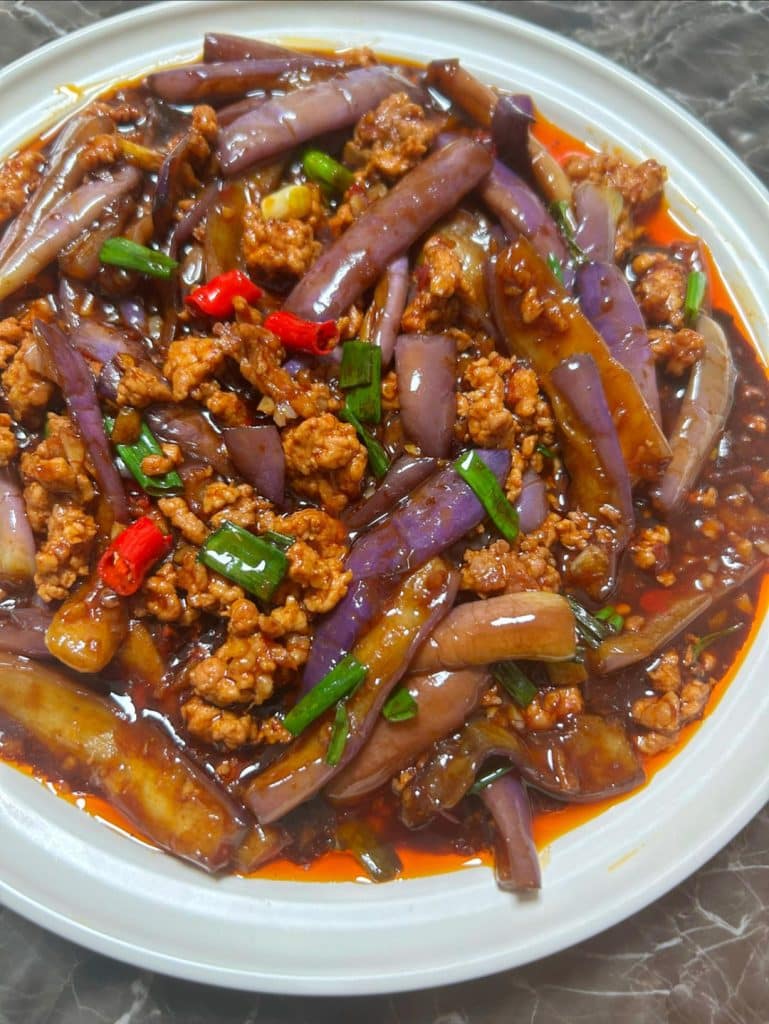
This isn’t the heavy, deep-fried eggplant you often find in Chinese takeout, which can sometimes feel like a greasy sponge. This is the homestyle version, the one that makes you reach for a second scoop of rice without a second thought. My dad, a chef for nearly 30 years, taught me the secret isn’t deep-frying, but a simple salting trick that transforms the eggplant, allowing it to pan-fry to a beautiful golden brown without soaking up a ton of oil.
This dish, known as Rou Mo Qiezi (肉末茄子), is a classic for a reason. It’s incredibly satisfying, comes together quickly, and uses the power of a few key pantry staples to create a sauce that’s bursting with flavor. It’s the kind of cooking I love—uncomplicated, comforting, and guaranteed to disappear from the dinner table.
What is Rou Mo Qiezi?
Rou Mo Qiezi literally translates to “minced meat eggplant.” It’s a beloved homestyle and restaurant dish, particularly popular in Sichuan cuisine. The star of the show is eggplant, braised until it’s supremely tender, served in a rich, savory sauce with seasoned minced pork. The sauce is the heart of the dish, typically featuring a savory, spicy kick from Doubanjiang (spicy broad bean paste). It’s the ultimate “下饭菜” (xià fàn cài), a term we use for dishes that are so flavorful they demand to be eaten with lots of steamed rice.
Why This Recipe Works
- No Deep-Frying Required: We use a simple pan-frying method that results in perfectly tender, beautifully browned eggplant without the mess or excess oil of deep-frying.
- Incredibly Flavorful Sauce: A perfectly balanced combination of savory, spicy, and umami notes that coats every piece of eggplant and pork.
- Beginner-Friendly Technique: I’ll walk you through the key steps, like why salting the eggplant is a game-changer, so even a novice can master this dish.
- Better Than Takeout: You control the ingredients, the amount of oil, and the spice level, resulting in a fresher, more vibrant dish that’s tailored to your taste.
Key Ingredients Explained
Before we start, let’s talk about a few crucial ingredients. Getting these right will make all the difference.
- The Eggplant: The best choice for this dish is long, slender Chinese or Japanese eggplant. Their skin is thinner, they have fewer seeds, and their flesh is creamier and less bitter than the large globe eggplants you see in most Western supermarkets. Look for eggplants that are firm, smooth, and have a vibrant purple color.
- The Minced Pork: I recommend using ground pork with a bit of fat, like an 80/20 lean-to-fat ratio. The fat renders down during cooking, adding incredible flavor and moisture to the dish. Ground chicken or turkey can also work, though the flavor will be leaner.
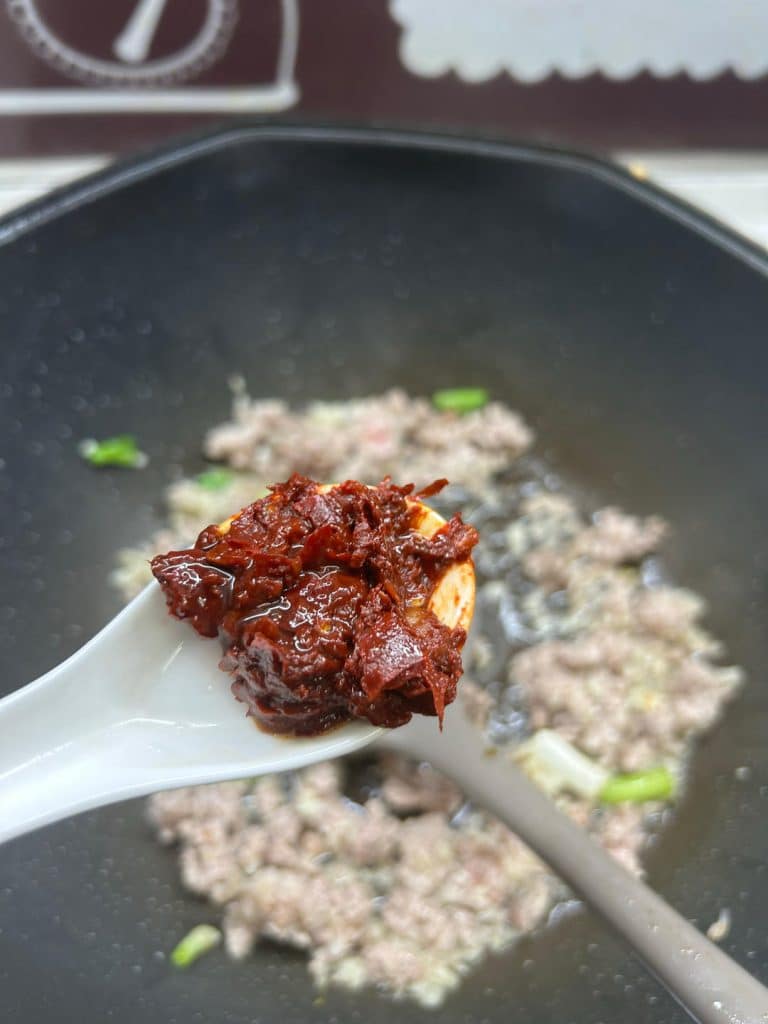
- Doubanjiang (豆瓣酱) – The Unskippable Ingredient: This is the soul of the dish. Doubanjiang is a spicy fermented broad bean paste that provides a deep, savory, umami flavor. Look for the “Pixian” (郫县) brand, which is considered the best. You can find it at any Asian grocery store or online. There’s no perfect substitute for its unique flavor, so it’s worth seeking out!
- The Sauces & Aromatics:
- Light Soy Sauce: This is for saltiness and umami. Brands like Kikkoman or Pearl River Bridge are excellent.
- Dark Soy Sauce: This is less salty and used primarily for its rich, dark color and a hint of molasses-like sweetness.
- Oyster Sauce: Adds a savory, umami-rich depth to the sauce.
- Aromatics: Fresh garlic and scallions are essential. For a little heat, I’m using Thai chilies (a great substitute for the recipe’s 小米辣, xiǎo mǐ là). You can adjust the amount or omit them entirely if you prefer a milder dish.
The Secret to Perfect, Non-Greasy Eggplant
My dad always said, “Eggplant is like a sponge; it will soak up all the oil you give it unless you teach it not to.” The trick is simple: salt.
By tossing the cut eggplant with salt and letting it sit for about 10 minutes, osmosis works its magic. The salt draws excess water out of the eggplant’s cell walls. When you squeeze this water out, you’re left with a denser eggplant that will pan-fry to a beautiful golden brown instead of steaming, and it won’t absorb nearly as much oil. This step is crucial and shouldn’t be skipped!
How to Make Sichuan-Style Braised Eggplant
Here’s a step-by-step guide to making this dish. Remember, stir-frying moves fast, so have all your ingredients prepped and ready to go before you turn on the stove.
Step 1: Prepare the Eggplant
Wash the eggplants and slice them into long, finger-sized strips, about 3-4 inches (8-10 cm) long.
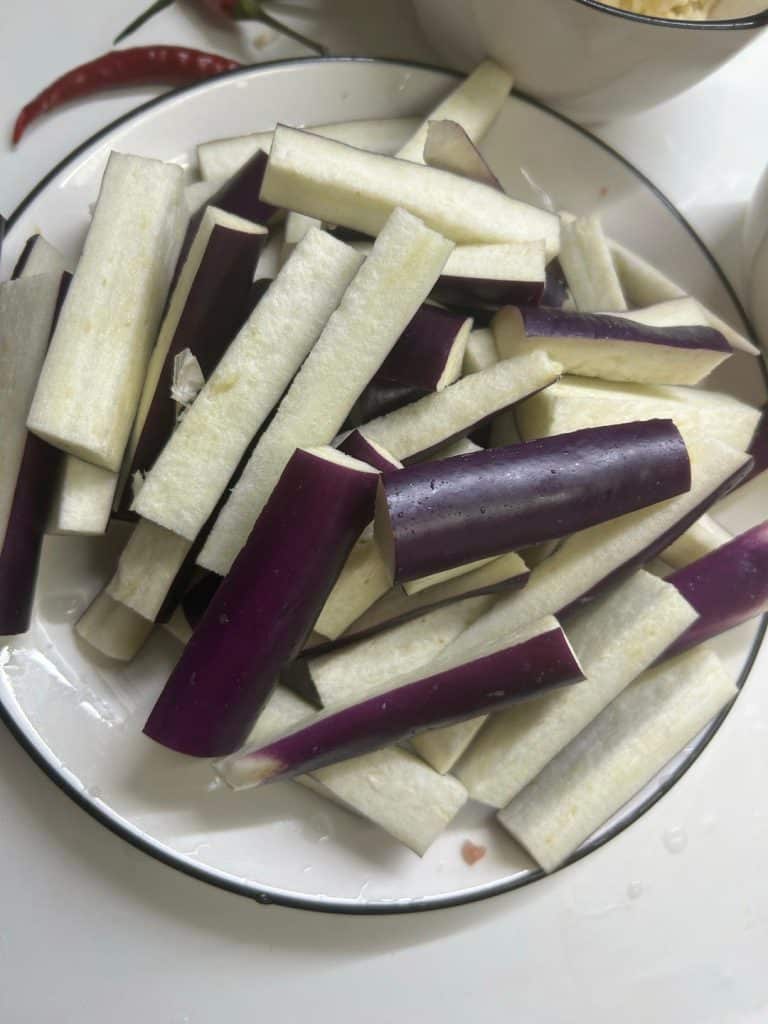
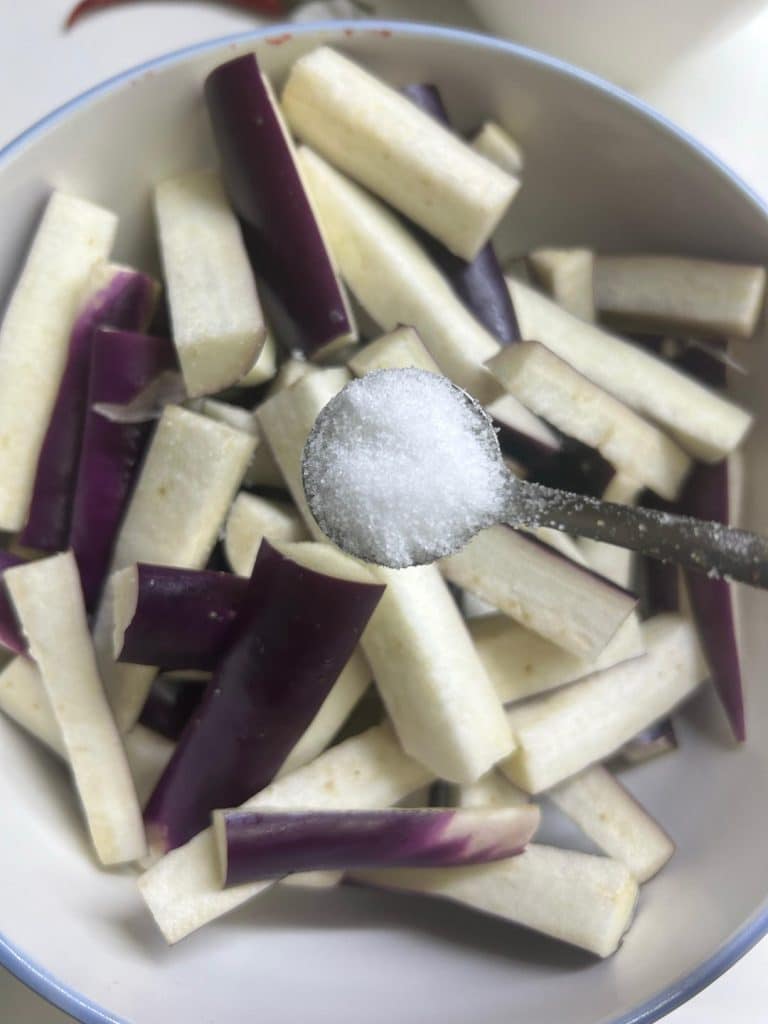
Place the eggplant strips in a large bowl and toss them with 1 teaspoon of salt. Let them sit for 10-15 minutes. You’ll see moisture beading on the surface.
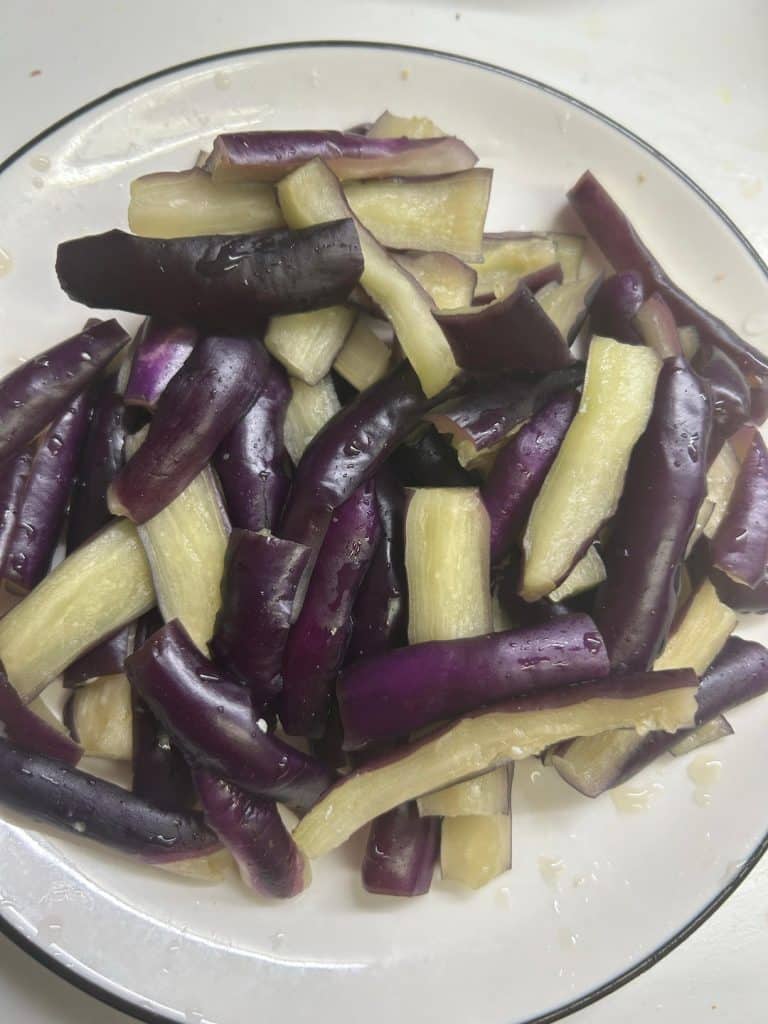
Working in batches, take handfuls of the eggplant and gently squeeze out as much excess liquid as you can. The eggplant will look a bit limp.
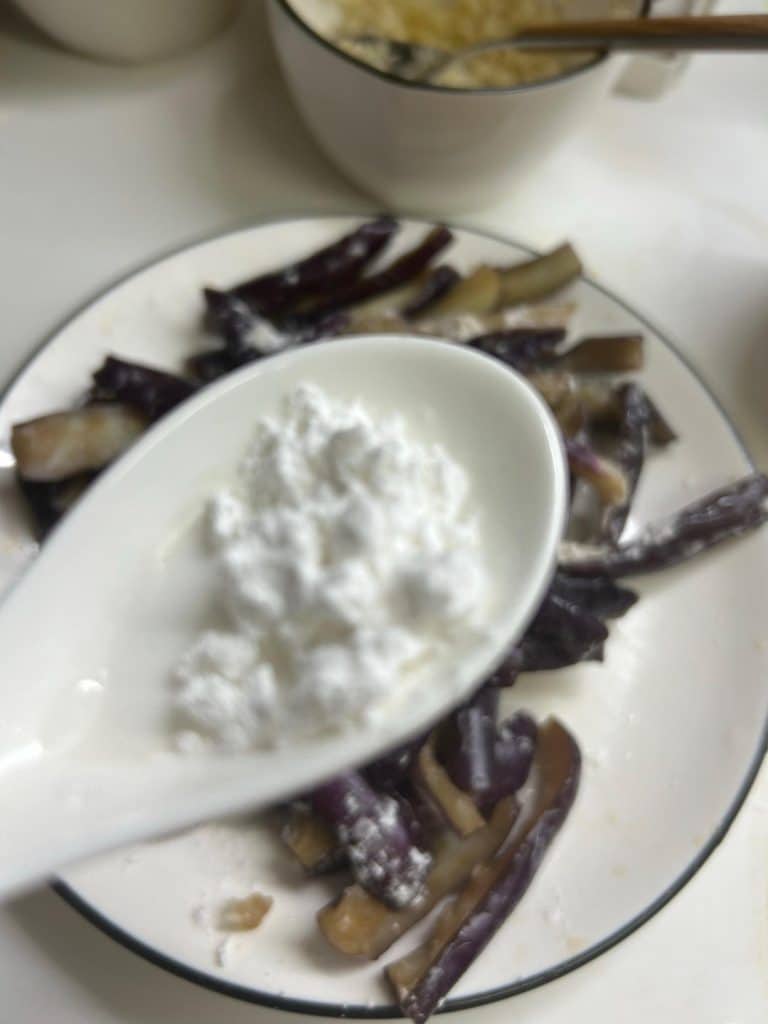
Add 1 tablespoon of cornstarch to the squeezed eggplant and toss until each piece is lightly coated. This helps create a nice sear.
Step 2: Mix the Sauce
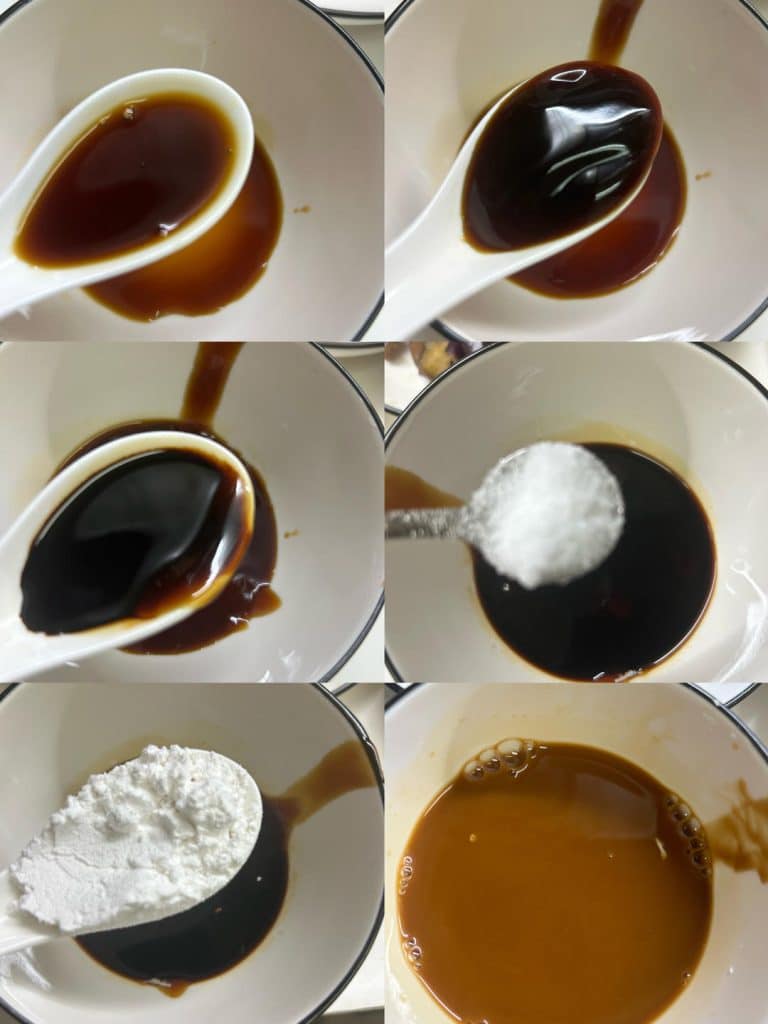
In a small bowl, whisk together the light soy sauce, dark soy sauce, oyster sauce, sugar, the remaining 1 teaspoon of cornstarch, and the chicken stock (or water). Set it aside. This ensures you can add it to the wok all at once without fumbling for different bottles.
Step 3: Cook the Dish
Heat 2 tablespoons of oil in a large skillet or wok over medium-high heat until it shimmers. Carefully place the eggplant strips in a single layer (you may need to do this in two batches). Pan-fry for about 2-3 minutes per side, until they are golden brown and tender. Remove the eggplant from the skillet and set aside.
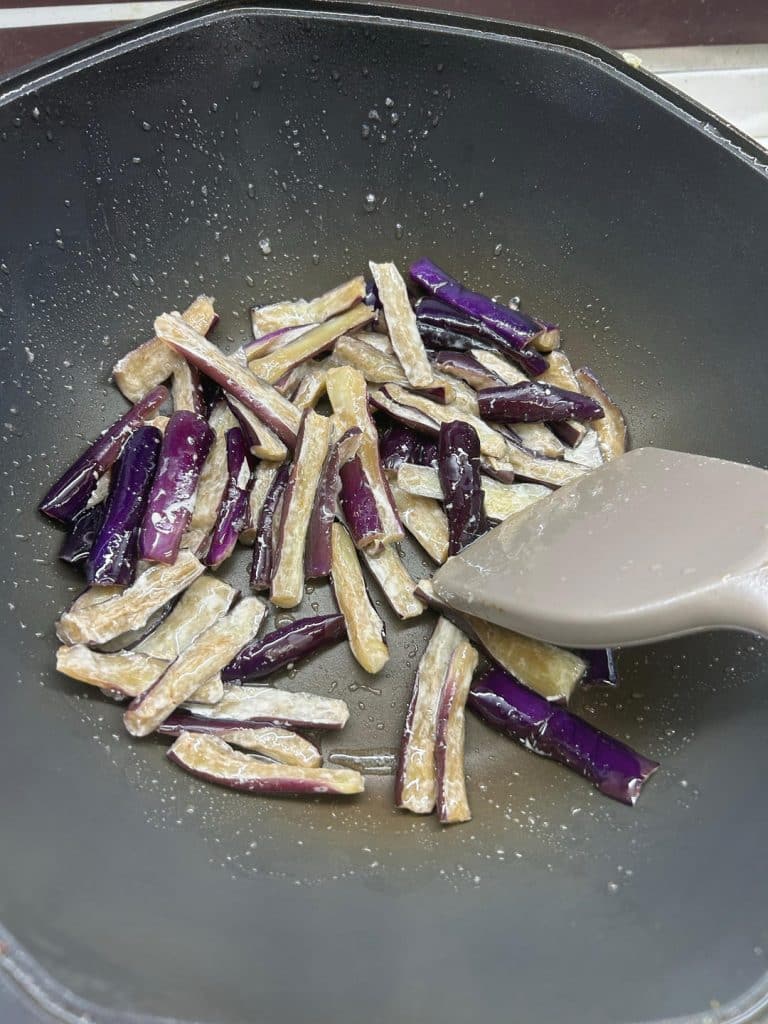
Add the remaining 1 tablespoon of oil to the same skillet. Add the minced pork and break it up with your spatula. Stir-fry until it’s cooked through and slightly browned.
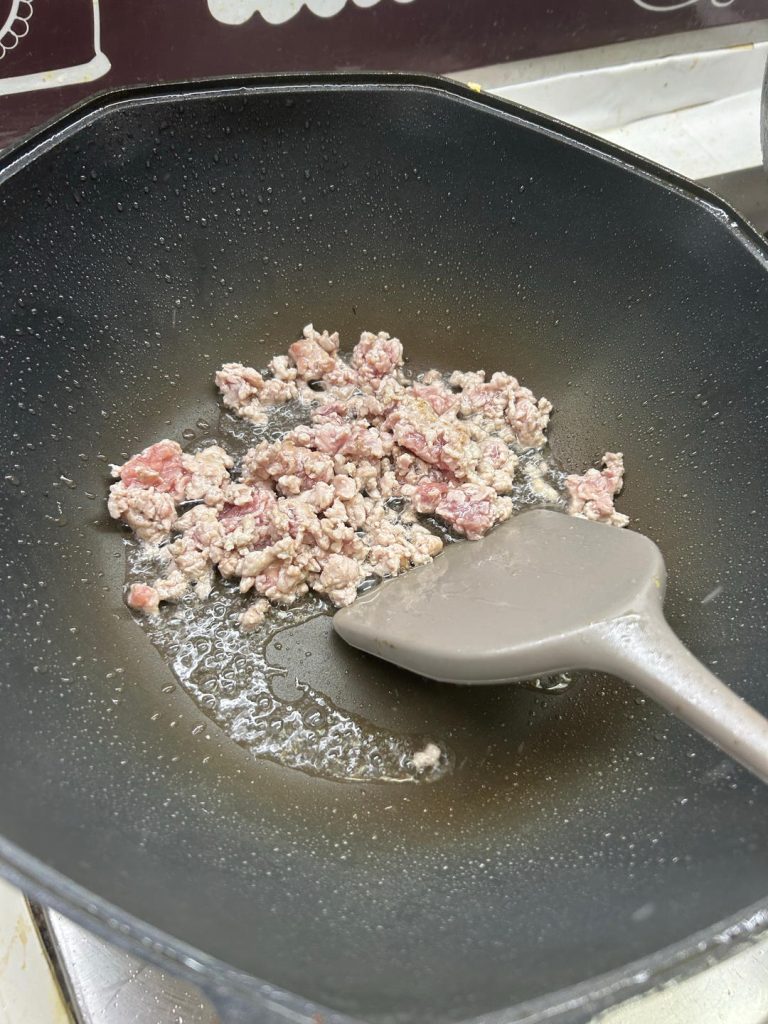
Add the chopped white parts of the scallions and the minced garlic. Sauté for about 30 seconds until fragrant.
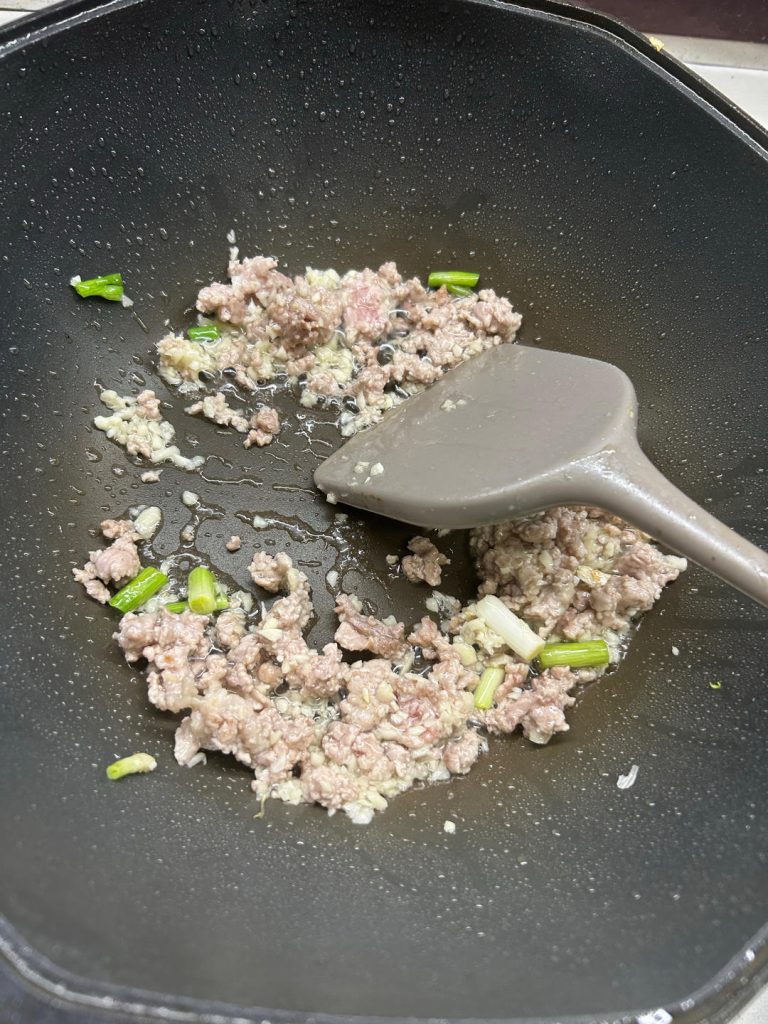
Add the Doubanjiang (spicy broad bean paste). Stir-fry for about 1 minute, until the oil turns a brilliant red color. This step, called “炒出红油” (chǎo chū hóng yóu), is essential for blooming the paste and unlocking its full flavor.
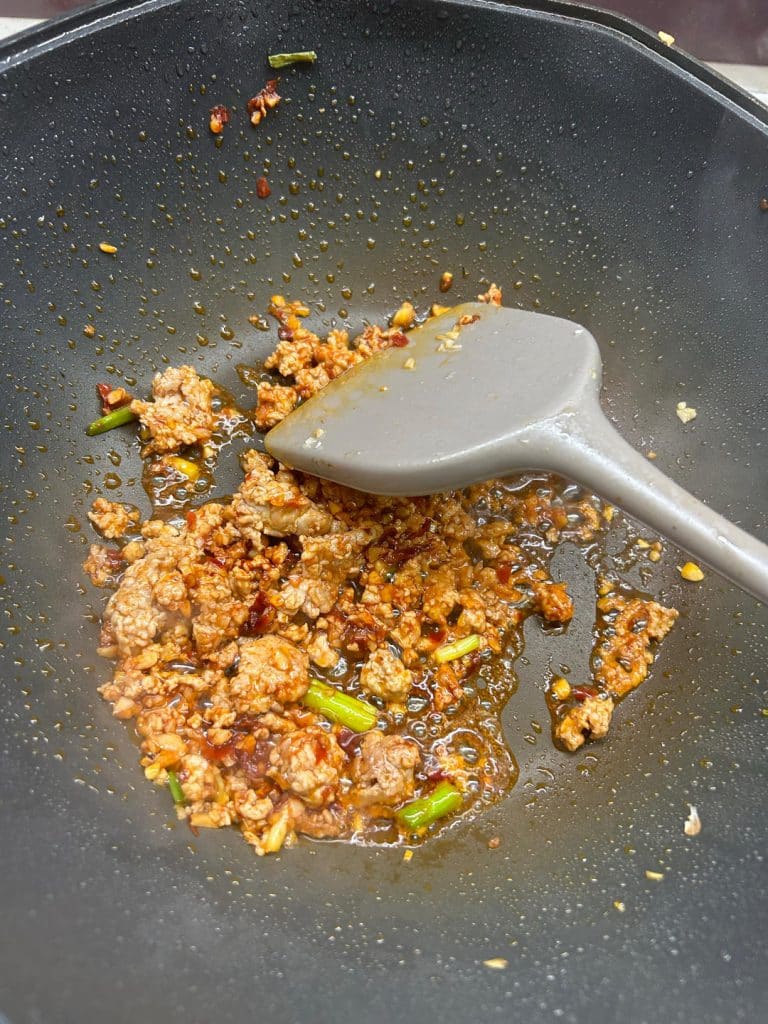
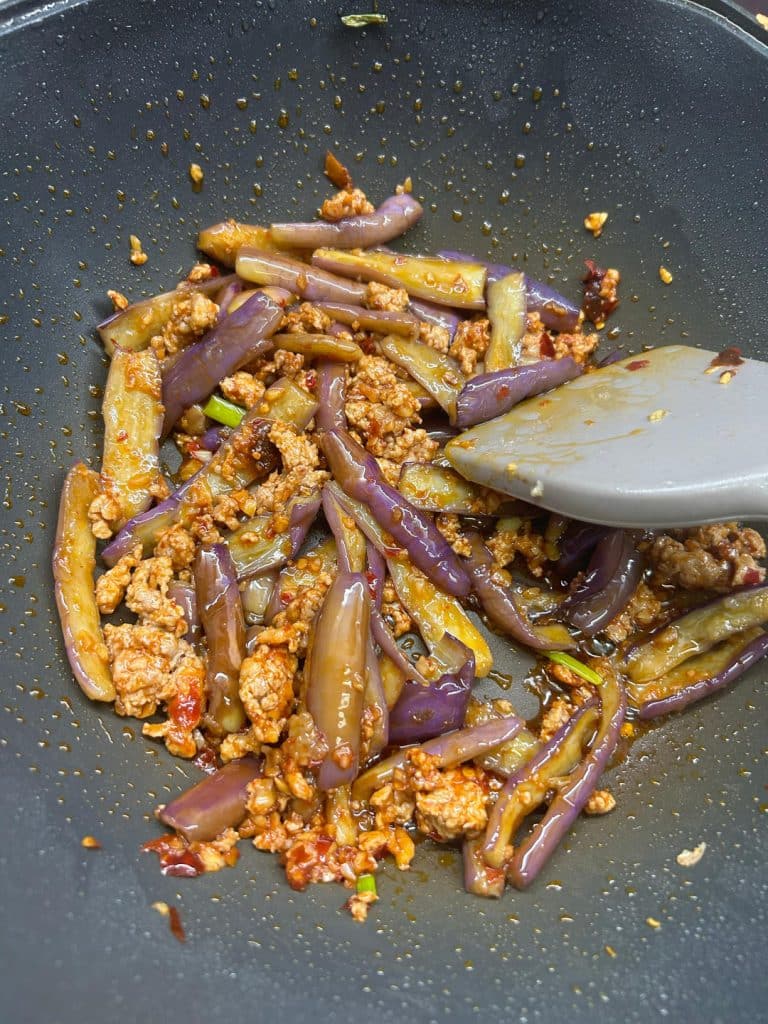
Return the cooked eggplant to the skillet. Give everything a good toss to combine.
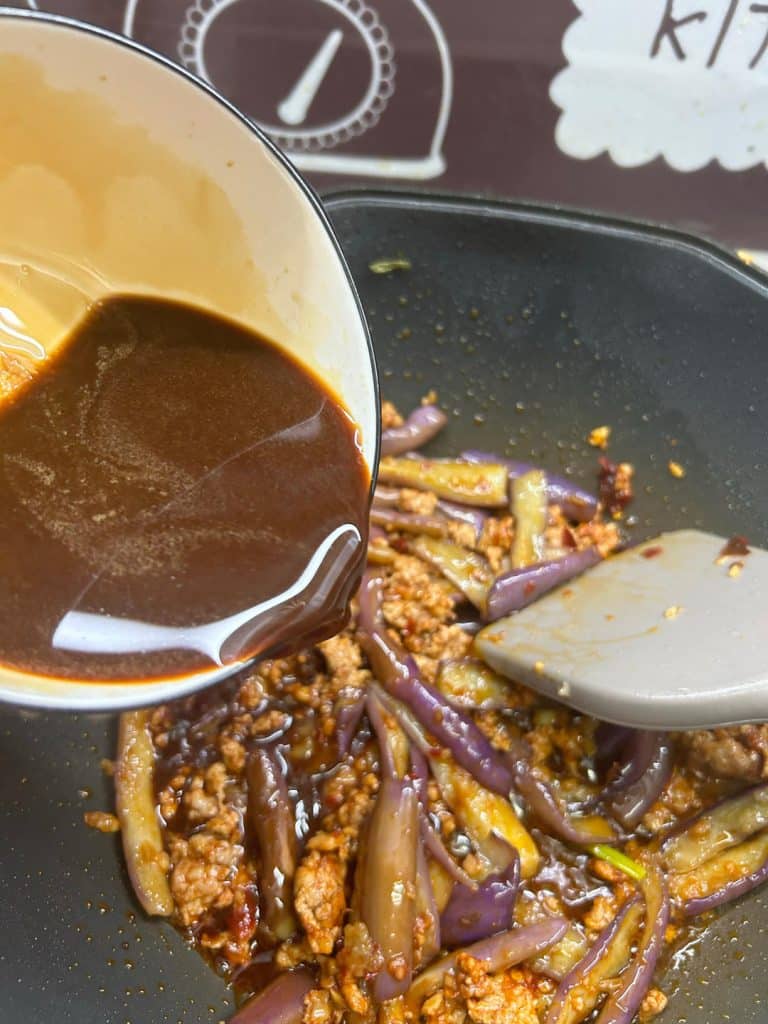
Give your prepared sauce a quick stir (the cornstarch may have settled) and pour it into the skillet.
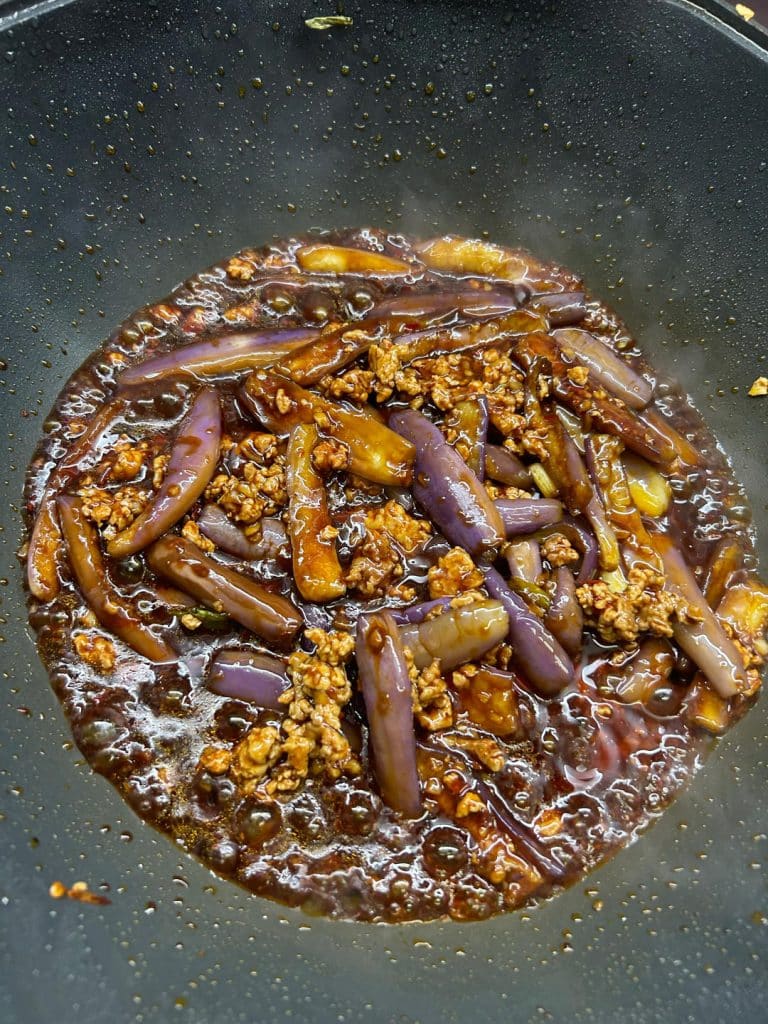
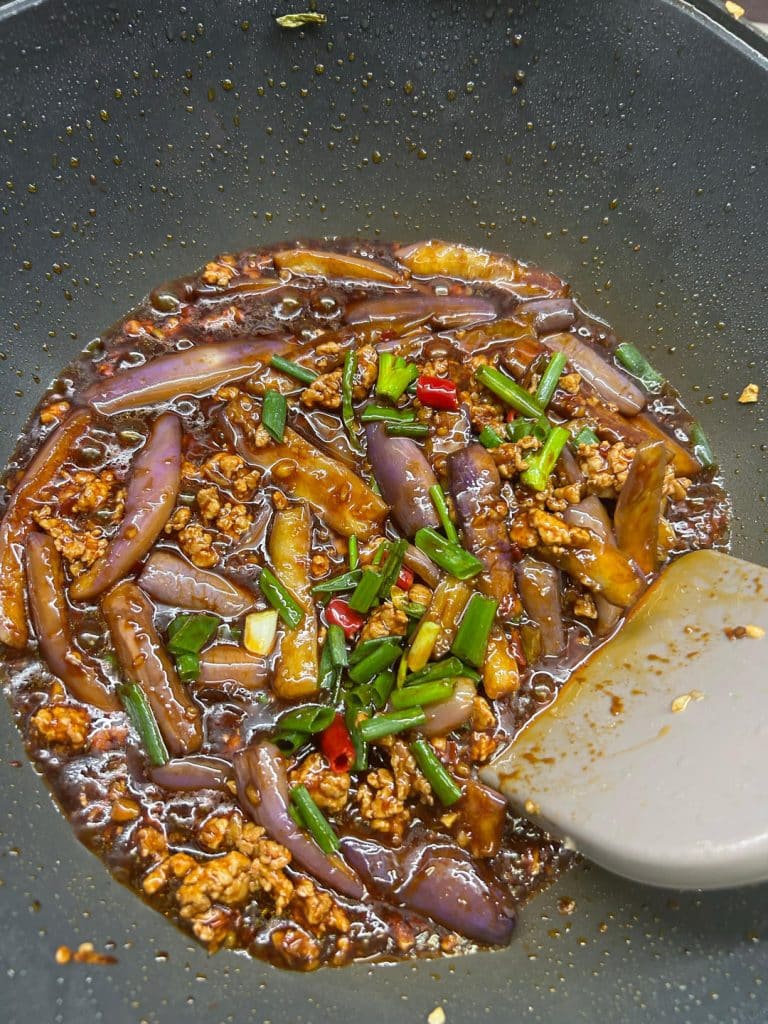
Bring the sauce to a simmer and cook, stirring gently, for 1-2 minutes, until the sauce thickens and beautifully coats the eggplant and pork.
Turn off the heat. Stir in the sliced Thai chilies and the green parts of the scallions.
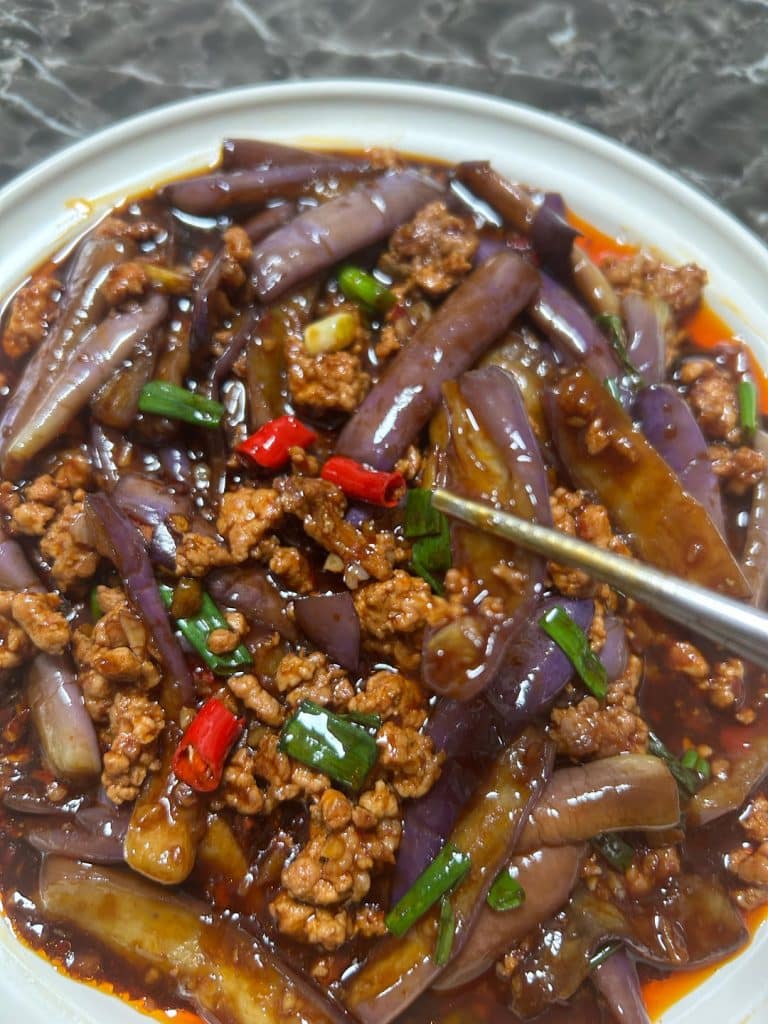
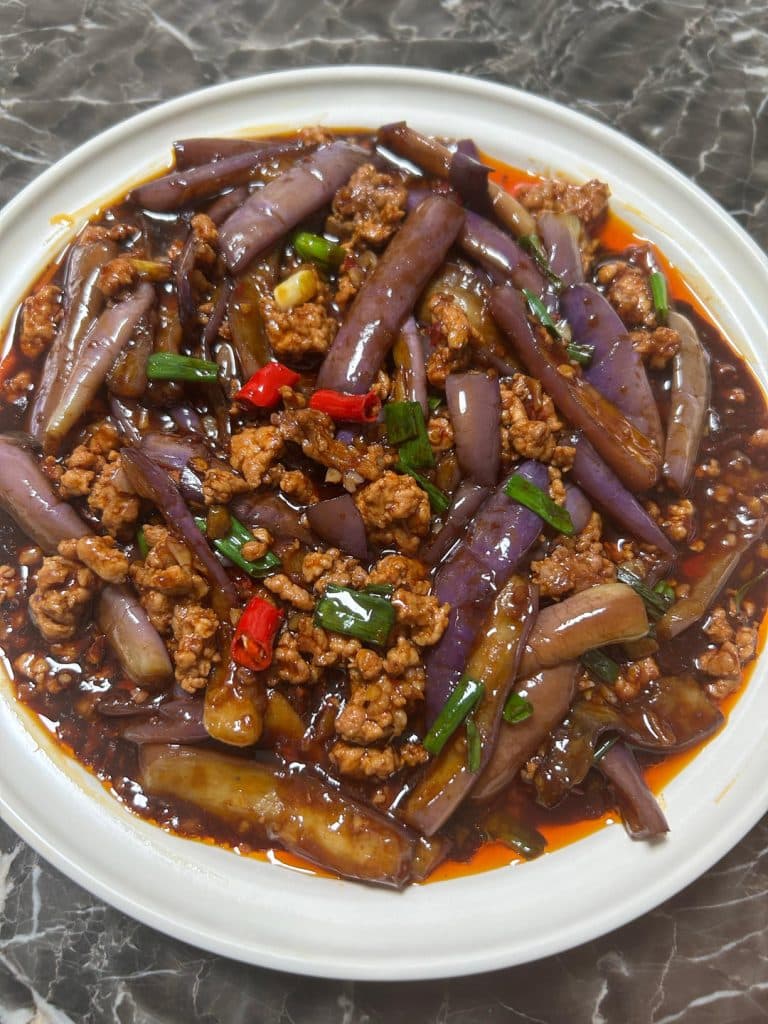
How to Serve and Store
This dish is best served immediately, piping hot, over a bed of fluffy steamed jasmine rice. The rice is the perfect vehicle to soak up every last drop of that incredible sauce.
For a more complete and balanced meal, I love serving it alongside a simple vegetable dish, like a plate of my Chinese Broccoli with Oyster Sauce , to add some green crunch and cut through the richness.
To store: Leftovers can be stored in an airtight container in the refrigerator for up to 3 days. Reheat in a skillet over medium heat or in the microwave.
Stir-Fried Eggplant with Minced Pork

Equipment
- 1 A Large Skillet or Wok A 12-inch nonstick skillet is perfect for this recipe, especially if you have an electric or induction stove. It provides a large, even heating surface that prevents the cornstarch-coated eggplant and pork from sticking. A well-seasoned carbon steel or cast-iron wok is also a fantastic choice, especially on a gas stove, as it can achieve the "wok hei" — a unique smoky flavor.
- 1 Mixing Bowls You'll need one large bowl for salting and prepping the eggplant, and a smaller one for whisking the sauce ingredients together.
- 1 Cutting Board and a Sharp Knife Essential for prepping the eggplant, garlic, and scallions.
- 1 Wok Spatula or Turner A good spatula is necessary for stir-frying and tossing the ingredients efficiently.
- 1 Measuring Spoons and Cups For accurately measuring the sauce ingredients to achieve that perfect flavor balance.
Ingredients
- 2 lbs eggplant (about 900g) Chinese or Japanese eggplant (about 4 long ones)
- 1 tsp salt salt
- 1 tbsp cornstarch
- 1 tsp cornstarch
- 3 tbsp neutral oil (like canola or avocado), divided
- ½ lb ground pork 225g (80/20 recommended)
- 4 cloves garlic minced
- 2 scallions whites and greens separated and thinly sliced
- 2 Thai chilies thinly sliced (optional, for garnish and heat)
For the Sauce
- 2 tbsp light soy sauce (e.g., Kikkoman)
- ½ tbsp dark soy sauce
- 1 tbsp oyster sauce
- ½ tsp sugar
- ½ cup water (120ml) low-sodium chicken stock or water
The Key Ingredient
- 1 tbsp Doubanjiang Spicy Broad Bean Paste, preferably Pixian brand
Instructions
- Prepare Eggplant: Slice eggplant into 3-4 inch long, finger-sized strips. In a large bowl, toss with 1 teaspoon of salt and let sit for 10-15 minutes. Squeeze out the excess water by hand, then toss the eggplant with 1 tablespoon of cornstarch until lightly coated.
- Mix Sauce: In a small bowl, whisk together the light soy sauce, dark soy sauce, oyster sauce, sugar, the remaining 1 teaspoon of cornstarch, and the chicken stock (or water). Set aside.
- Pan-Fry Eggplant: Heat 2 tablespoons of oil in a large skillet or wok over medium-high heat. Pan-fry the eggplant in a single layer (in batches if needed) until golden brown and tender, about 2-3 minutes per side. Remove and set aside.
- Cook Pork & Aromatics: Add the remaining 1 tablespoon of oil to the skillet. Add the ground pork and stir-fry until cooked through. Add the minced garlic and the white parts of the scallions and cook for 30 seconds until fragrant.
- Bloom Doubanjiang: Add the Doubanjiang and stir-fry for 1 minute until the oil turns red and aromatic.
- Combine: Return the cooked eggplant to the skillet. Pour in the prepared sauce mixture. Bring to a simmer and cook for 1-2 minutes, stirring gently, until the sauce thickens and coats everything.
- Garnish and Serve: Turn off the heat and stir in the sliced Thai chilies (if using) and the green parts of the scallions. Serve immediately over steamed rice.
Notes
Nutrition Information
Per serving (based on 3 servings)- Calories: 485 kcal
- Carbohydrates: 18 g
- Protein: 15 g
- Fat: 38 g
- Saturated Fat: 10 g
- Cholesterol: 55 mg
- Sodium: 1250 mg
- Potassium: 550 mg
- Fiber: 6 g
- Sugar: 9 g
Cooking Tips & FAQ
Yes, but it’s not ideal. If you do, I recommend peeling the thicker skin first. Be aware that globe eggplants contain more water and seeds, so you’ll need to be extra thorough when squeezing out the moisture.
This usually happens for two reasons: 1) You didn’t squeeze out enough water after salting, or 2) your pan wasn’t hot enough when you added the eggplant, causing it to steam and absorb oil rather than searing.
Ground chicken, turkey, or even finely crumbled firm tofu are great substitutes. If using tofu, press it well to remove excess water and pan-fry it until golden before proceeding with the recipe.
Reviews From Our Kitchen
“This recipe is a game-changer! The tip about salting the eggplant made all the difference. It tasted just like my favorite restaurant version, but so much fresher. My family devoured it.” – Jessica L.
“I finally found a Rou Mo Qiezi recipe that works! The instructions were so clear, especially the part about frying the bean paste. That flavor is amazing. This is definitely going into my weekly rotation.” – David C.
“Made this tonight and it was delicious. I used ground chicken instead of pork and it turned out great. I might add a splash of vinegar next time for a little extra tang. Thanks for a great, easy-to-follow recipe!” – Samantha P.