Growing up in my parents’ Chinese restaurant, I learned that the best meals weren’t always the ones on the menu. My favorite was often the “staff meal” soup, which was almost always a variation of Hot and Sour Soup. It was the ultimate “kitchen sink” soup—my dad, a chef, would throw in whatever scraps and leftover ingredients were on hand, and it always came out incredibly delicious and comforting.
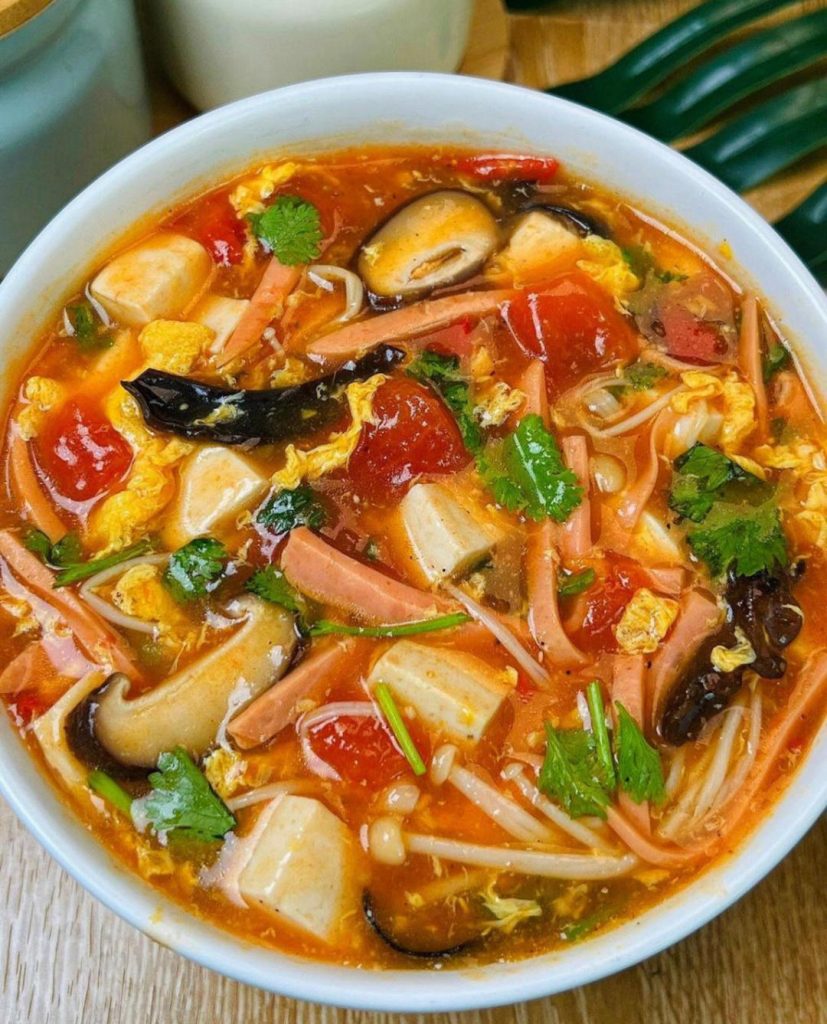
When I first moved to the US for school, I’d get intense cravings for it. I’d order from local takeout spots, but it was never quite right. The balance was off—often too sweet, too gloopy from cornstarch, or missing that characteristic “kick.”
This recipe is my Jia Chang Ban (家庭版), or “family version.” It’s the one I make in my own kitchen now. It’s not the super-traditional version (which can sometimes include pork blood), but it’s the fast, fresh, and vibrant soup I grew up with. The secret to this homestyle version is fresh tomato, which builds a bright, savory base without weighing the soup down.
It’s a perfectly balanced one-bowl meal that comes together in under 30 minutes, and it’s packed with so much more flavor and texture than any takeout version I’ve ever had.
What Is Hot and Sour Soup?
Hot and Sour Soup, or Suan La Tang (酸辣汤), is one of China’s most famous soups. The name says it all: “Suan” (酸) means sour, which comes from vinegar, and “La” (辣) means spicy, which traditionally comes from white pepper, not chili.
It’s beloved for its unique, silky texture, which is created by thickening the broth with a cornstarch slurry. This thickened broth perfectly suspends all the ingredients—like tofu, mushrooms, and carrots—and the beautiful, pale-yellow “egg ribbons” that are swirled in at the end. While it’s often associated with Sichuan cuisine, versions of it are popular all over China.
Why You’ll Love This Recipe
- Better Than Takeout: This is the real deal. You control the ingredients, so it’s not overly sweet or thick. It’s fresh, tangy, and has a clean, spicy finish.
- Ready in 30 Minutes: This is one of my go-to weeknight meals. The prep is all in the chopping, but the cooking process is incredibly fast.
- Amazingly Flexible: Think of this recipe as a template. You can easily swap out the vegetables for whatever you have in your fridge, like bamboo shoots, cabbage, or spinach.
- Packed with Goodness: Unlike some restaurant versions that are mostly broth, this soup is loaded with tofu, three types of mushrooms, and fresh veggies. It’s hearty, satisfying, and nutritious.
Key Ingredients Explained
Making authentic-tasting hot and sour soup requires a few key pantry staples. Here’s what you’ll need and where to find them.
- Tofu: Use Firm or Medium-Firm Tofu. This is important! Silken or soft tofu is too delicate and will disintegrate when you stir the soup.
- The Mushrooms (The “Three Treasures”):
- Wood Ear Mushrooms (木耳): You’ll find these dried in bags at any Asian market or online. They look like wrinkly black chips but bloom into a wonderful, crunchy, gelatinous texture when rehydrated. They don’t add much flavor, but the texture is essential.
- Shiitake Mushrooms: These provide a deep, savory, “meaty” umami flavor. Fresh are easiest, but you can also use rehydrated dried shiitakes.
- Enoki Mushrooms: These are the clusters of long, thin white mushrooms. They add a lovely, almost noodle-like texture and cook in seconds.
- The “La” (Spicy):
- Ground White Pepper: This is non-negotiable for real hot and sour soup. It provides a sharp, earthy, lingering heat that is completely different from the fruity sting of black pepper. Please don’t substitute this!
- Millet Peppers (小米椒): The original recipe calls for these small, fiery red chilies. You can easily substitute them with 1-2 Thai chilies or 1/4 teaspoon of red pepper flakes. If you don’t like spice, just leave them out.
- The “Suan” (Sour):
- Chinkiang Vinegar (镇江香醋): This is a black, malty, and complex vinegar that adds a deep, savory sourness. You can find it at most Asian groceries. The best substitute is rice vinegar, which is sharper, so you might want to start with a little less.
- The “Thickener” (Slurry):
- Cornstarch: This is what gives the soup its classic, silky body. We mix it with cold water to make a “slurry”.
- Safety Tip: Never add dry cornstarch directly to hot liquid, or it will seize into permanent, unpleasant clumps. Always dissolve it in cold water first.
- The Umami Base:
- Tomato: My family’s secret ingredient! Cooking it down first builds a naturally sweet, tangy, and umami-rich foundation.
- Light Soy Sauce: This is for saltiness and umami. Kikkoman or Pearl River Bridge are great, reliable brands.
- Oyster Sauce: This adds a wonderful sweet-savory depth. I use Lee Kum Kee. You can find vegetarian oyster sauce (made from mushrooms) for a veggie-friendly version.
Mise en Place: Get Everything Ready First
This soup cooks in less than 10 minutes, so you must have all your ingredients prepped and ready to go before you turn on the stove. This is the restaurant secret to any good stir-fry or soup.
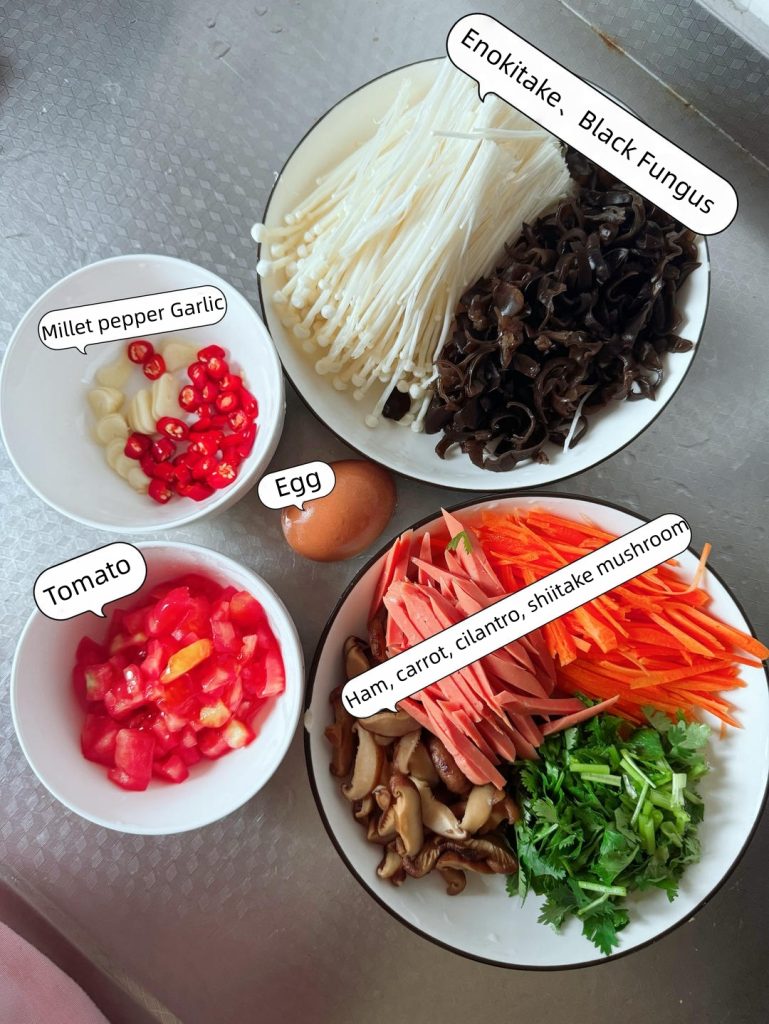
- Hydrate: Place the dried wood ear mushrooms in a bowl and cover with warm water. Let them soak for 15-20 minutes until they are soft and expanded.
- Prep Veggies & Tofu:
- Drain the rehydrated wood ear mushrooms, rinse them, and slice them into thin strips.
- Slice the shiitake mushrooms.
- Trim the root end off the enoki mushrooms and pull the cluster apart.
- Peel and julienne the carrot (cut into thin matchsticks).
- Peel and dice the tomato.
- Cut the tofu into small 1/2-inch cubes.
- Julienne the ham.
- Thinly slice the garlic and chop the Thai chilies.
- Chop the cilantro and green onion for garnish.
- Make the Sauce Mix: In a small bowl, whisk together the light soy sauce, Chinkiang vinegar, oyster sauce, sugar, ground white pepper, and salt.
- Make the Slurry: In a separate small bowl, mix the cornstarch with the cold water until smooth.
- Beat the Eggs: In a third small bowl, beat the two eggs.
How to Make Hot and Sour Soup: Step-by-Step
Step 1: Build the Aromatic Base
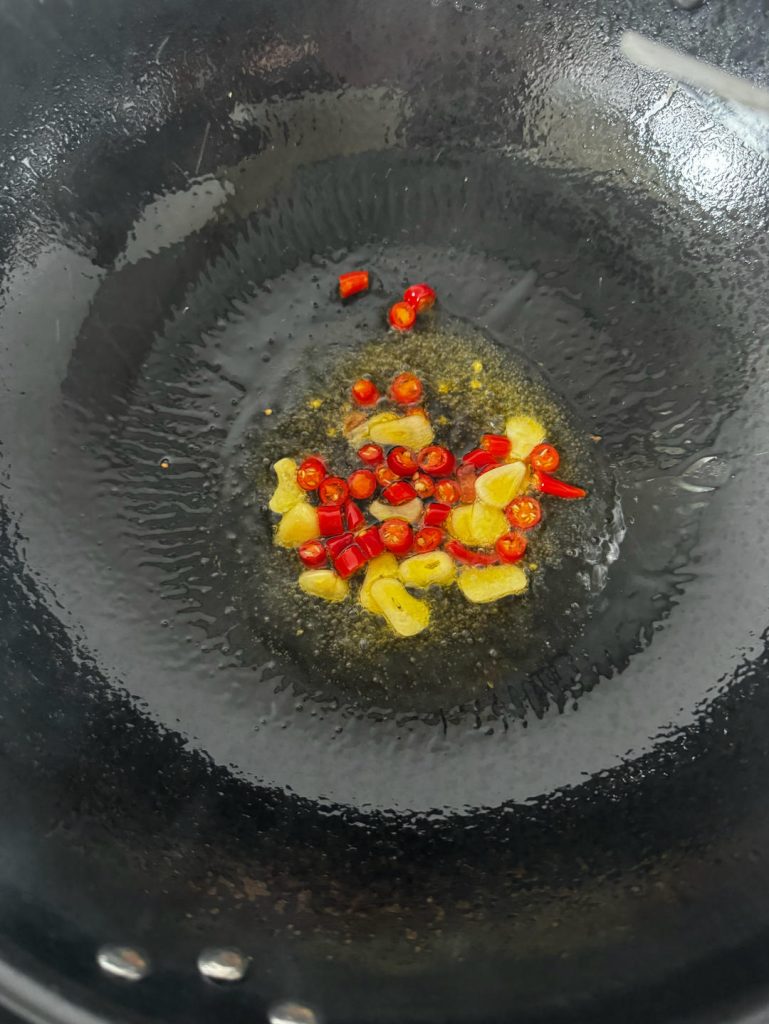
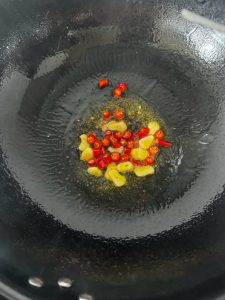
Heat the neutral oil in a large pot or Dutch oven over medium heat. Add the sliced garlic and chopped Thai chilies (if using). Stir-fry for about 30 seconds until fragrant.
Step 2: Cook Down the Tomato
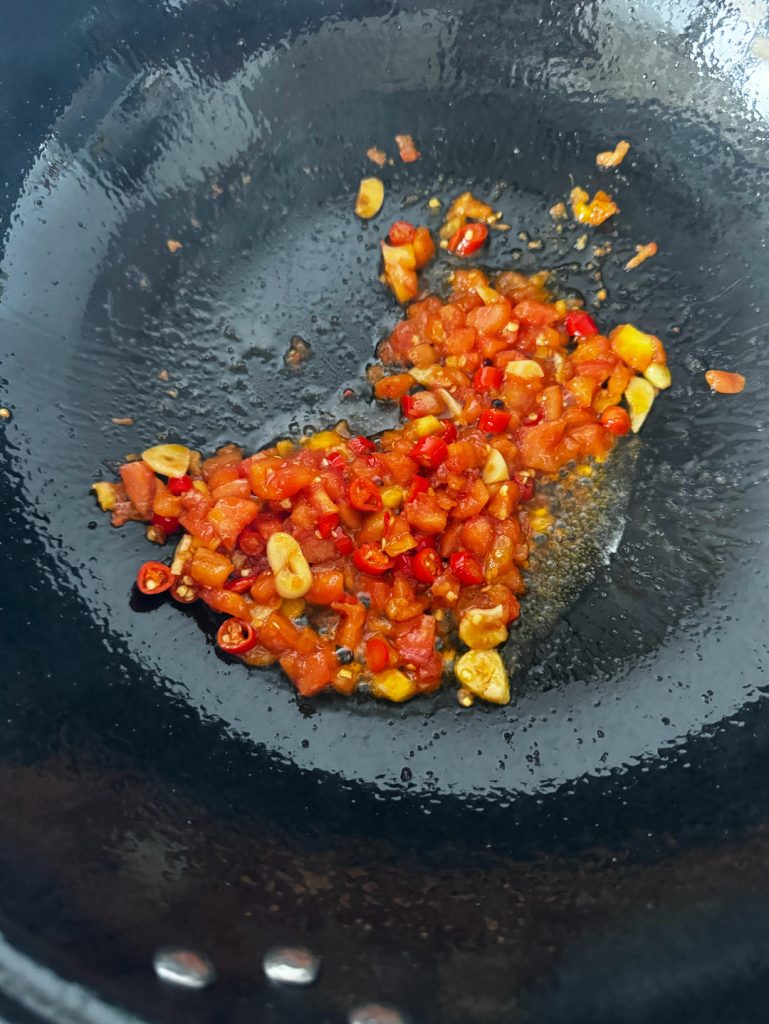
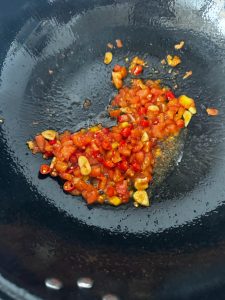
Add the diced tomato to the pot. Cook over medium-low heat, stirring occasionally, for 3-4 minutes. You want the tomato to break down completely into a “sandy” or pulpy paste. This creates the soup’s flavor foundation.
Step 3: Simmer the Ingredients
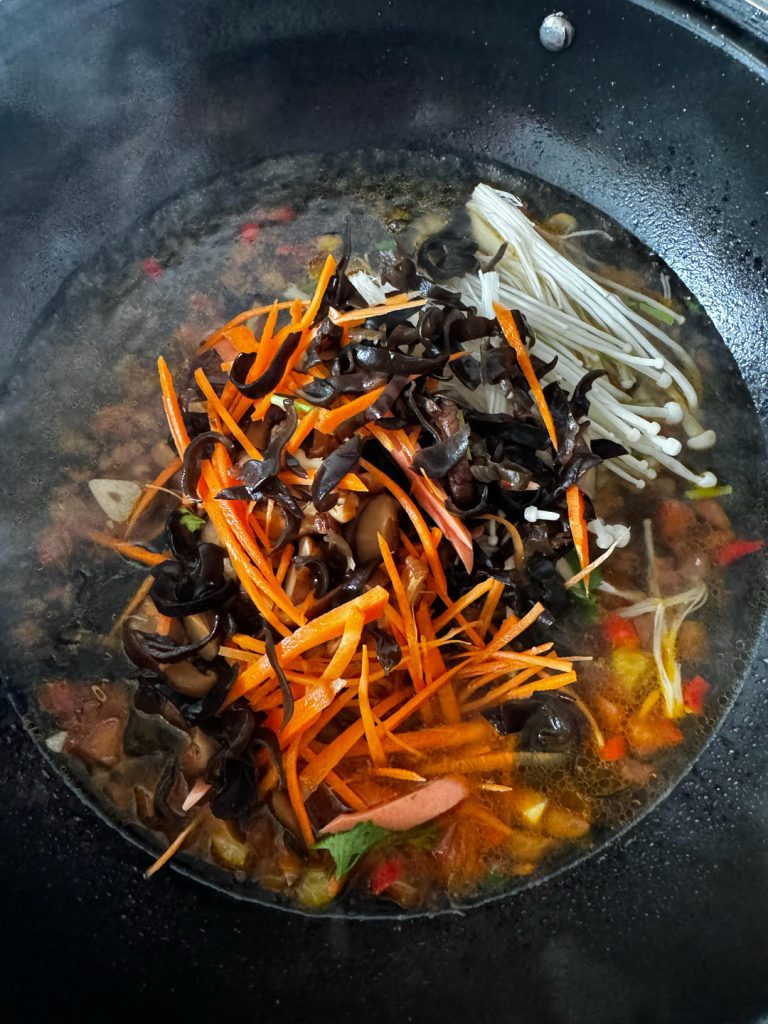
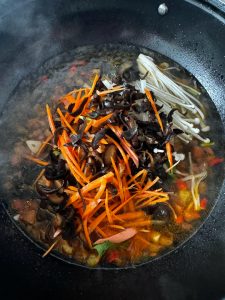
Pour in the water (or broth) and turn the heat to high. As soon as it boils, add the cubed tofu, sliced shiitakes, sliced wood ear, enoki mushrooms, julienned ham, and julienned carrots.
Step 4: Season the Soup
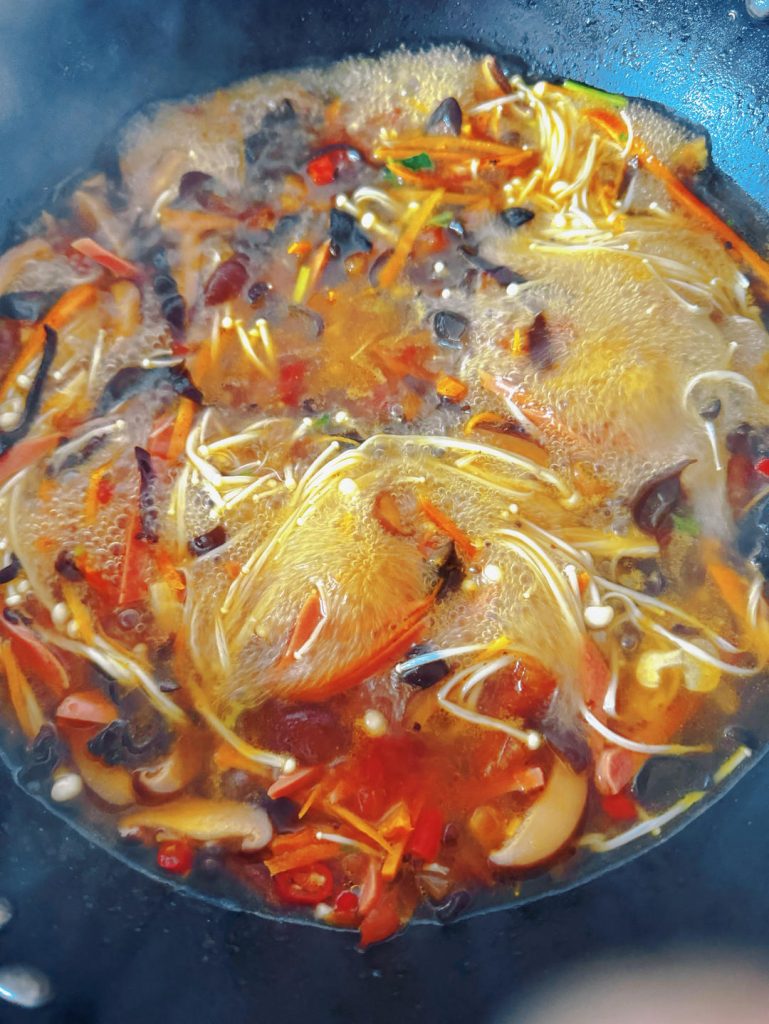
Pour your pre-mixed sauce (soy, vinegar, oyster sauce, sugar, white pepper, salt) into the pot. Stir well and bring everything back to a boil. Let it simmer for 3-5 minutes for all the flavors to meld together.
Step 5: Create the Egg Ribbons
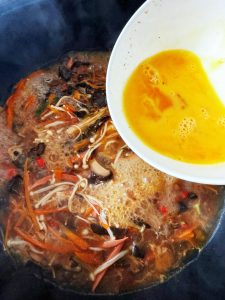
This is the most important technique! While the soup is at a gentle, rolling boil (not a violent one), slowly drizzle the beaten egg into the pot in a thin, steady stream, moving your hand in a circle.
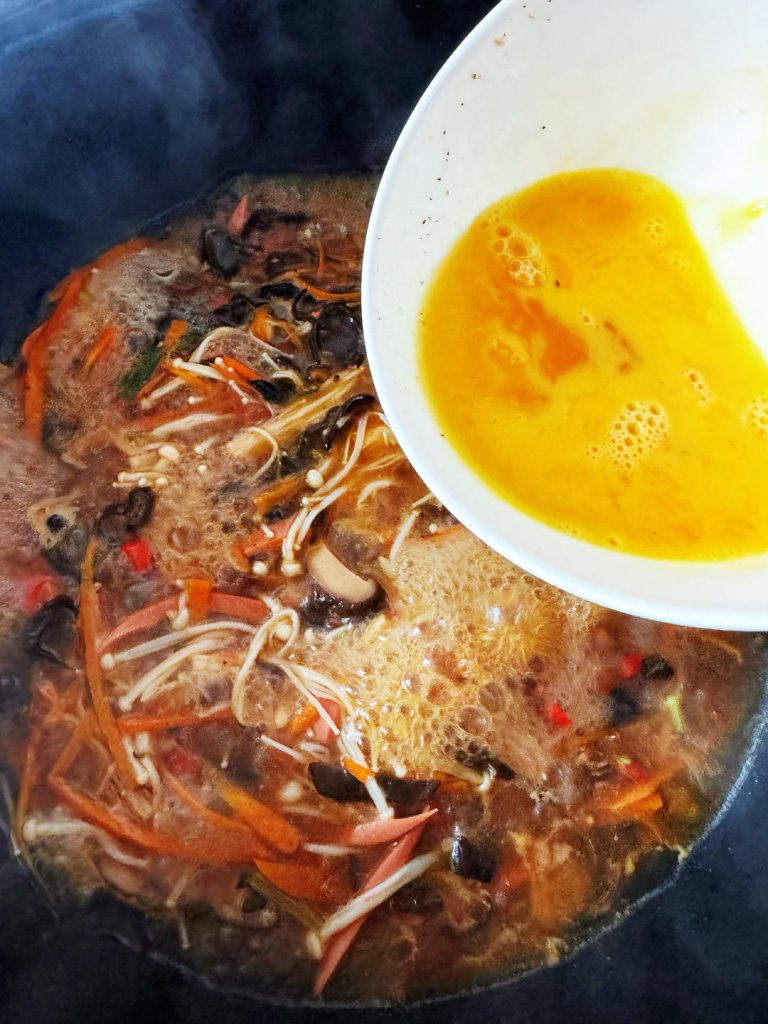
Crucial Tip: Let the egg set for 15-20 seconds before you stir. If you stir immediately, you’ll get tiny, sad egg bits. Waiting allows the egg to cook into beautiful, long, silky ribbons.
Step 6: Thicken the Soup
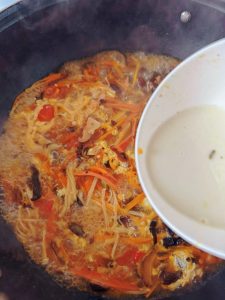
Give your cornstarch slurry a quick re-stir (it settles fast!). Turn the heat down to low. While stirring the soup gently in one direction, slowly pour in the slurry. You will feel the soup thicken and become silky almost instantly.
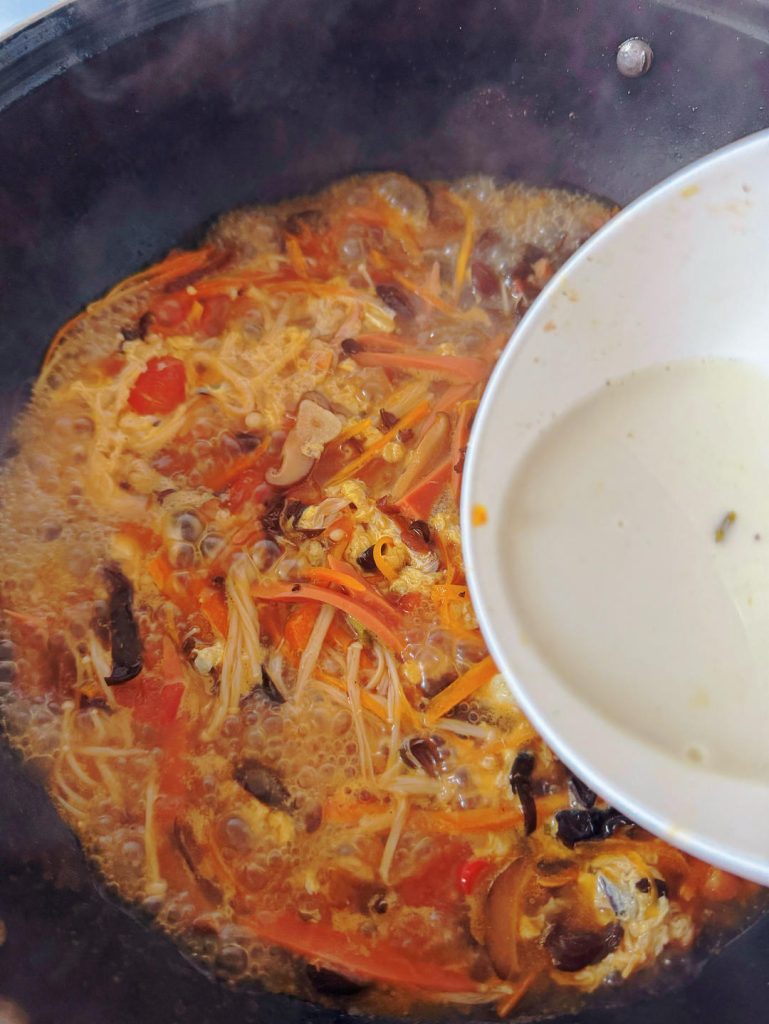
Step 7: Finish and Garnish
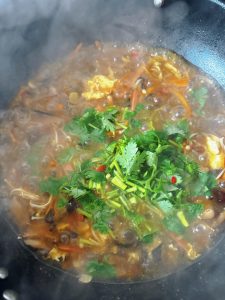
Turn off the heat. Stir in the chopped cilantro, green onion, and the final teaspoon of sesame oil.
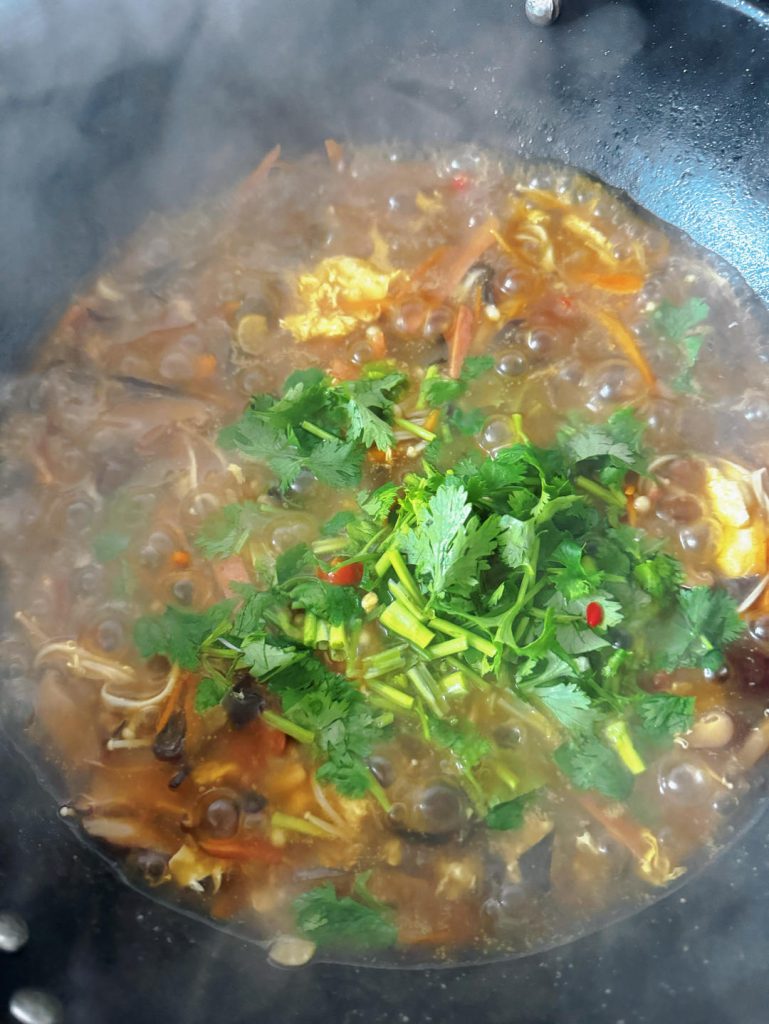
This is the most important step: Taste the soup. Every family and every person has a different preference. Does it need more “suan” (sour)? Add another splash of vinegar. More “la” (spicy)? Add another dash of white pepper. Adjust it until you love it.
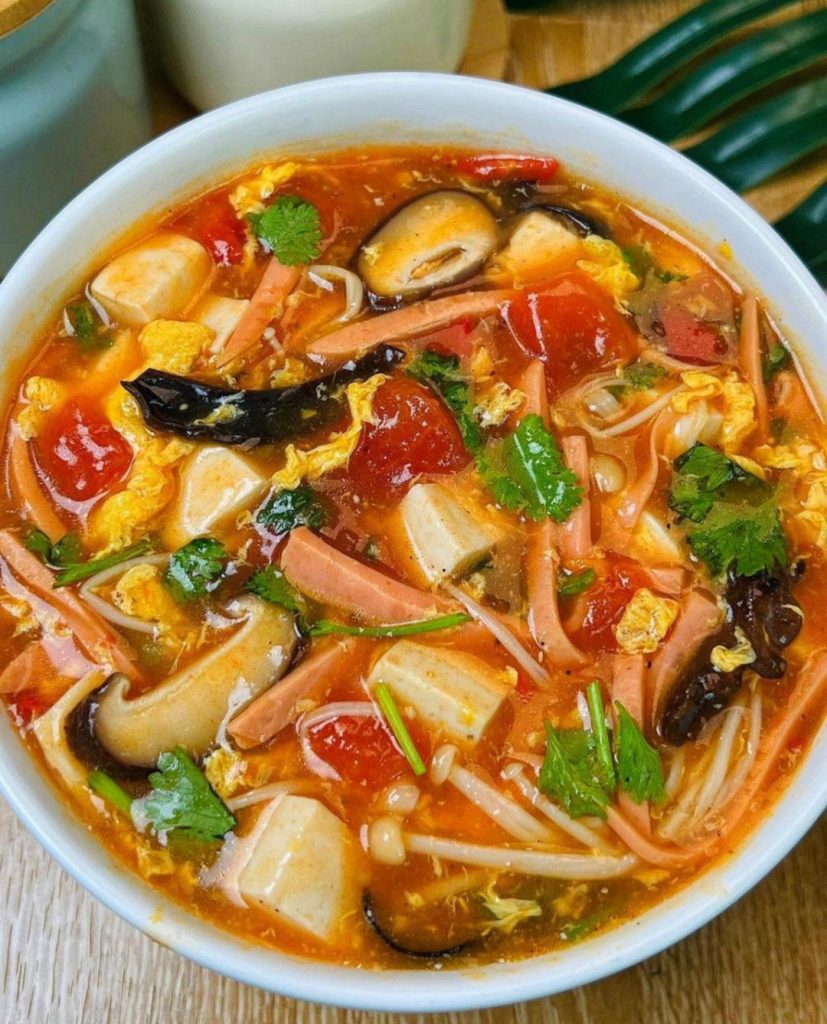
Cooking Notes and Tips for Success
- On White Pepper: I’m saying it again because it’s that important. You must use ground white pepper. It is the signature flavor of the soup.
- Adding Vinegar: The “sour” in vinegar is an aromatic, and it can cook off if boiled for too long. For the brightest flavor, I like to add half the vinegar in Step 4 and the other half right at the end in Step 7, off the heat.
- Troubleshooting Lumps: If your soup is lumpy, it means you either added the cornstarch to hot water (not cold) or you poured the slurry in too fast while the soup was boiling too hard. Go slow and stir gently.
- Making it Vegetarian: This soup is incredibly easy to make vegetarian or vegan.
- Omit the ham.
- Use vegetable broth instead of water for a richer taste.
- Use a vegetarian oyster sauce (Lee Kum Kee makes a great one).
Serving Suggestions
This soup is so hearty it’s a perfect one-bowl meal for a light dinner or lunch. However, it’s also a fantastic starter for a multi-course Chinese meal.
I love serving it alongside something crispy, like Crispy Vegetarian Potstickers for dipping, or as a prelude to a savory main like Chinese Eggplant with Minced Pork. And of course, a side of simple steamed rice is always welcome to balance the flavors.
How to Store and Reheat Leftovers
- To Store: Let the soup cool and store it in an airtight container in the refrigerator for up to 3 days.
- To Reheat: Reheat the soup gently in a pot over medium-low heat.
- A Note on Texture: The soup will likely become thicker after being refrigerated (the starches will set). Simply add a splash of water or broth while reheating to loosen it back to its original silky consistency. I do not recommend freezing this soup, as the tofu’s texture can become spongy and unpleasant.
Frequently Asked Questions
1. Can I use black pepper instead of white pepper?
I strongly advise against it. The flavor profile is completely different. Black pepper is floral and fruity, while white pepper is earthy and has a sharp, warm heat that is the signature of this soup.
2. Can I add meat?
Absolutely! A common addition is thinly sliced pork, “velveted” and added in Step 3. You can also use shredded chicken.
3. What’s a good substitute for wood ear mushrooms?
Texturally, there isn’t a perfect substitute. If you can’t find them, you can simply omit them and add more shiitake mushrooms or some julienned bamboo shoots for a different kind of crunch.
4. Is this recipe gluten-free?
As written, no. Light soy sauce, oyster sauce, and Chinkiang vinegar all contain gluten. To make it gluten-free, you must use tamari (a gluten-free soy sauce), a certified gluten-free oyster sauce, and rice vinegar (which is naturally gluten-free).
Easy Homestyle Hot and Sour Soup (酸辣汤)

Equipment
- 1 Large Pot or Dutch Oven
- 1 3 Small Bowls (for sauce, slurry, and eggs)
Ingredients
Base Ingredients
- 1 tbsp Neutral Oil (like canola or vegetable oil)
- 2 cloves Garlic thinly sliced
- 1-2 Thai Chilies (or millet peppers, optional) chopped
- 1 medium Tomato peeled and diced
- 4 cups Water (or low-sodium chicken or vegetable broth) about 1 L
- 7 oz Firm Tofu about 200g, cut into 1/2-inch cubes
- 1/2 cup Dried Wood Ear Mushrooms about 1/4 oz or 7g dry
- 3.5 oz Fresh Shiitake Mushrooms about 100g or 4-5 mushrooms, thinly sliced
- 3.5 oz Enoki Mushrooms about 100g, root end trimmed and separated
- 1/2 medium Carrot julienned
- 2 oz Ham about 57g or 2 deli slices, julienned
- 2 large Eggs beaten
For the Sauce Mix
- 1 tbsp Light Soy Sauce
- 2 tbsp Chinkiang Vinegar or rice vinegar
- 1 tbsp Oyster Sauce use vegetarian oyster sauce for veg option
- 1/2 tsp Sugar
- 1/2 tsp Ground White Pepper use more or less to taste
- 1/4 tsp Salt or to taste
For the Slurry & Garnish
- 2 tbsp Cornstarch
- 4 tbsp Cold Water
- 1 tsp Sesame Oil
- 2 tbsp Cilantro chopped
- 1 Green Onion chopped
Instructions
- Hydrate & Prep: In a small bowl, cover the dried wood ear mushrooms with warm water and let soak for 15-20 minutes. Once soft, drain, rinse, and slice into thin strips.
- Mise en Place: While the mushrooms soak, prep all other ingredients as described in the ingredient list (slice, dice, julienne). In a small bowl, whisk together all "Sauce Mix" ingredients. In a separate small bowl, whisk the cornstarch and cold water to make the slurry. In a third bowl, beat the 2 eggs.
- Build Base: Heat the oil in a large pot over medium heat. Add the sliced garlic and chopped Thai chilies (if using). Stir-fry for 30 seconds until fragrant.
- Cook Tomato: Add the diced tomato and cook for 3-4 minutes, stirring, until it breaks down into a pulpy paste.
- Simmer Soup: Add the water (or broth) and turn the heat to high. When it boils, add the tofu, wood ear, shiitake, enoki, ham, and carrots.
- Season: Pour in the "Sauce Mix" and stir. Bring back to a boil and let simmer for 3-5 minutes.
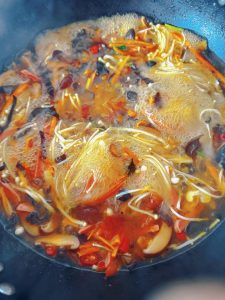
- Egg Ribbons: While the soup is at a gentle boil, slowly drizzle in the beaten eggs in a thin stream. Do not stir for 15-20 seconds. This allows the egg to set into long, silky ribbons.
- Thicken: Turn the heat to low. Give the cornstarch slurry a quick re-stir, then slowly pour it into the soup while stirring gently. The soup will thicken and become silky almost immediately.
- Garnish & Serve: Turn off the heat. Stir in the sesame oil, chopped cilantro, and green onion. Taste and adjust seasoning if needed (more vinegar for sourness, more white pepper for spice). Ladle into bowls and serve immediately.
Notes
Notes
- White Pepper is Key: Do not substitute black pepper for white pepper. The flavor is completely different and essential for this soup.
- Vinegar: For an even brighter sour flavor, add half the vinegar with the sauce mix (Step 6) and the other half right at the end with the sesame oil (Step 9).
- Gluten-Free: To make this gluten-free, you must use tamari (GF soy sauce), a certified GF oyster sauce, and rice vinegar.
Nutrition (Disclaimer)
Calories: 145kcal | Carbohydrates: 12g | Protein: 10g | Fat: 7g | Saturated Fat: 1.5g | Cholesterol: 85mg | Sodium: 750mg | Potassium: 380mg | Fiber: 2.5g | Sugar: 3g | Vitamin A: 1500IU | Vitamin C: 10mg | Calcium: 80mg | Iron: 1.5mg Nutrition information is calculated using an ingredient database and should be considered an estimate. In cases where multiple ingredient alternatives are given, the first listed is calculated for nutrition. Garnishes and optional ingredients are not included.Real Comments From Our Readers
- ★★★★★”I made this last night and it was PERFECT. Just like the soup I’ve been missing. The tip about the fresh tomato and white pepper made all the difference. This is my new go-to recipe.” – Jessica L.
- ★★★★★”This was so fast! I always thought Hot and Sour Soup was complicated, but the instructions were so clear. My husband said it was better than our local takeout. The egg ribbon trick worked perfectly!” – Mark D.
- ★★★★☆”A really solid recipe. I made the vegetarian version with veggie broth and veggie oyster sauce, and it was delicious. I added some bamboo shoots like you suggested. Will definitely make this again, maybe with a little more white pepper next time.” – Sarah K.